Kernel-Level Anti-Cheat Explained: Benefits, Risks, and Misconceptions
Kernel-level anti-cheat is one of the most debated topics in PC gaming. Players see terms like ring 0, driver, kernel access, Vanguard, BattlEye, Easy Anti-Cheat, FACEIT, and RICOCHET, but the practical meaning is often unclear.
This article explains the concept in plain language. It does not provide instructions for bypassing anti-cheat systems or avoiding detection.
What kernel-level means
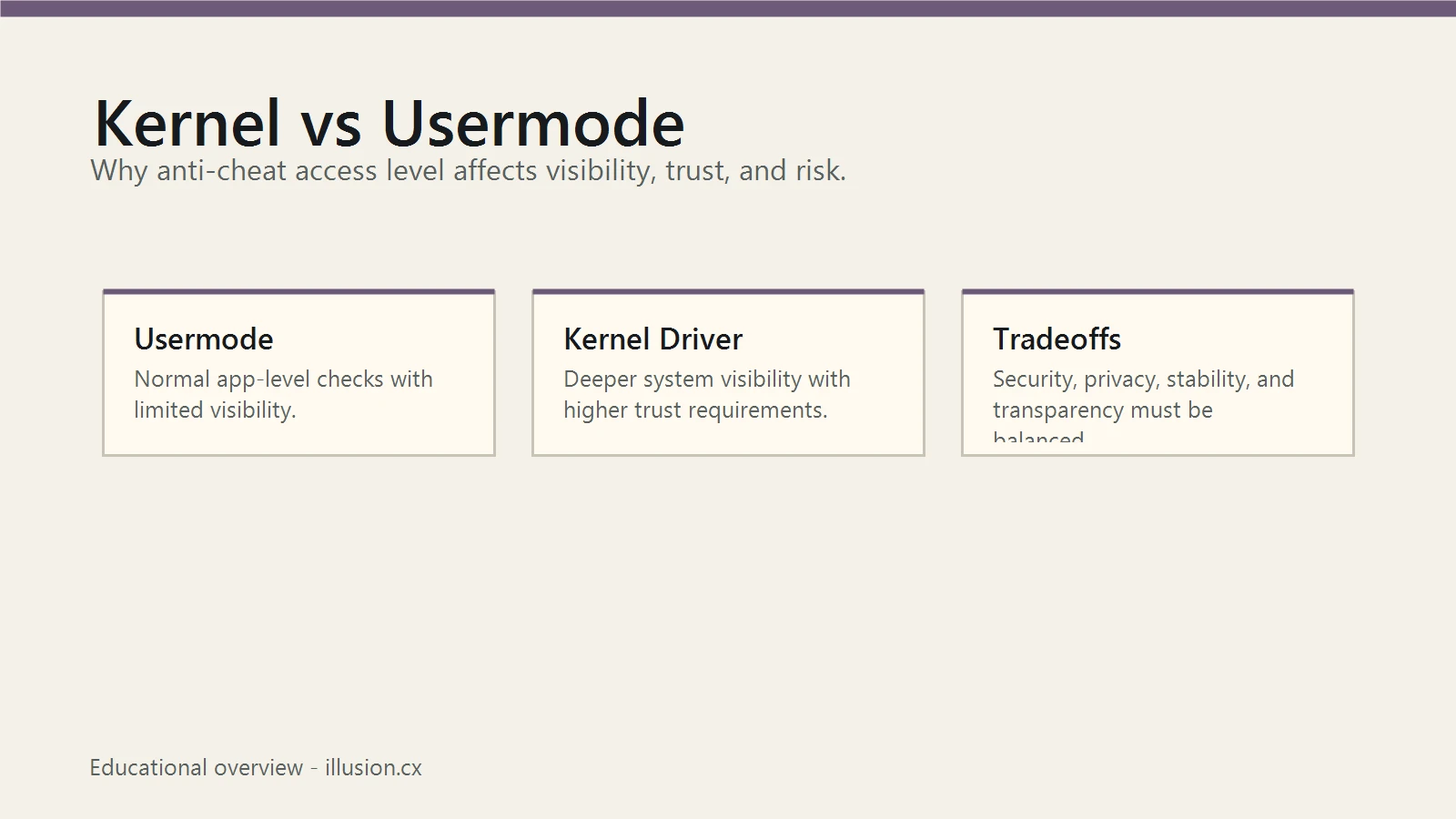
Most applications run with normal user-level permissions. The kernel is the core layer of the operating system. Software running there has deeper visibility and control than ordinary programs. A kernel-level anti-cheat uses a driver to observe activity that a normal process may not be able to see.
Why games use kernel anti-cheat
Cheating software evolved from simple memory editors into more advanced tools that can hide from normal user-level checks. Some cheats use drivers, vulnerable signed components, hardware input devices, or external tools that are difficult to inspect from a normal application. Kernel-level anti-cheat is a response to that escalation.
What kernel anti-cheat can help detect
At a high level, kernel anti-cheat may help identify suspicious drivers, unauthorized memory access, process tampering, hidden modules, debugger activity, unexpected handle access, and signs that another tool is attempting to interfere with the game. It can also support file integrity, runtime protection, and communication with backend enforcement systems.
The privacy concern
The concern is reasonable: deeper access requires deeper trust. A kernel driver must be stable, narrowly scoped, and maintained carefully. Poorly designed low-level software can cause crashes, compatibility issues, or privacy concerns. That is why players often compare whether a driver runs only during the game or loads earlier in the boot process.
False positives and enforcement
Good anti-cheat systems avoid relying on a single weak signal. A random background app should not be enough to punish an account. Reliable enforcement usually depends on multiple signals, known signatures, integrity checks, telemetry, manual review, or repeatable evidence.
Common misconceptions
Misconception: Kernel access means the anti-cheat catches everything. It does not. It improves visibility, but cheating remains an arms race.
Misconception: All kernel anti-cheats behave the same way. They do not. Load timing, scope, telemetry, privacy design, update cadence, and enforcement philosophy vary by vendor.
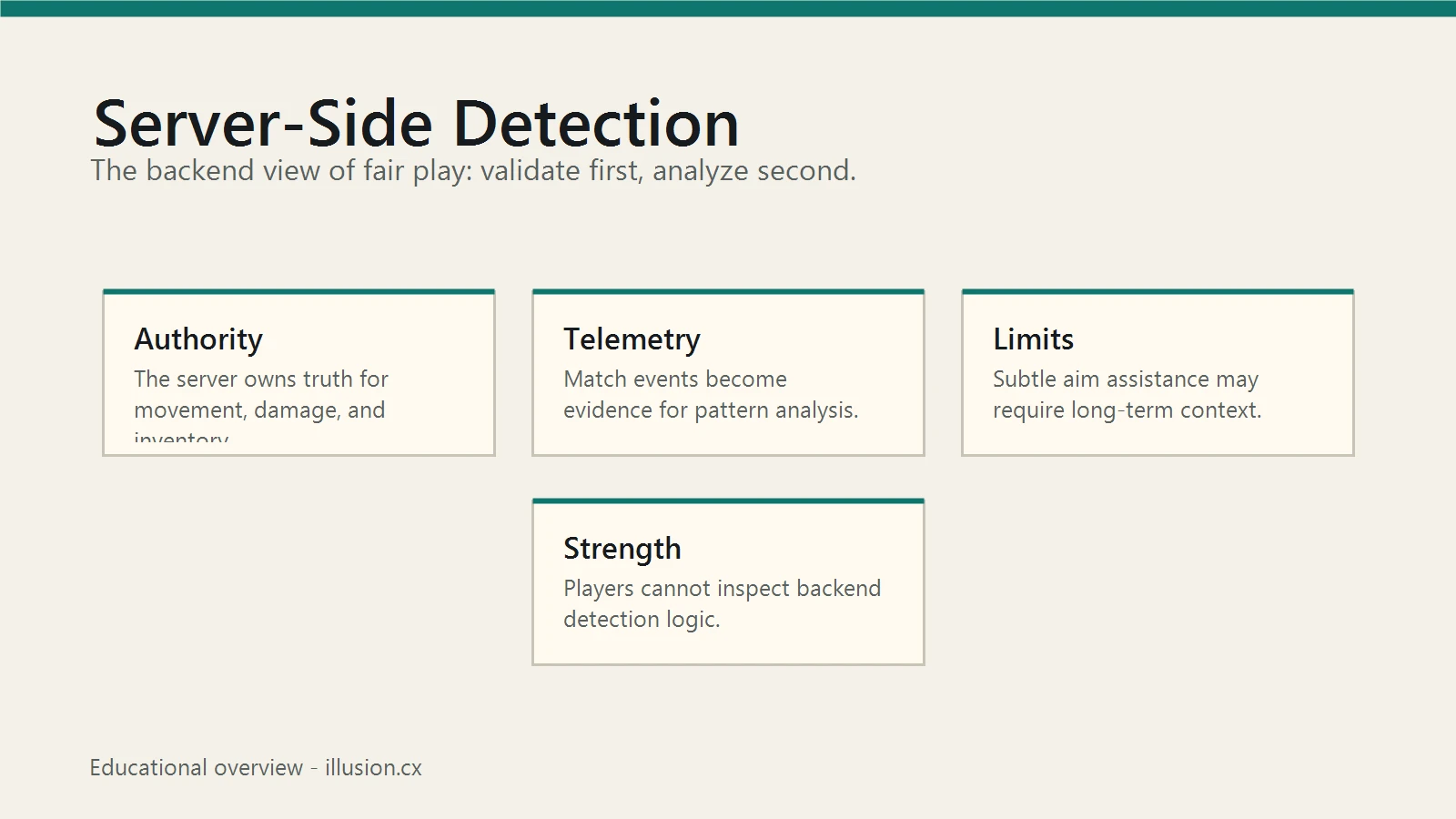
Misconception: Server-side detection is unnecessary if kernel anti-cheat exists. Server-side validation still matters because it sees match behavior and can detect patterns that local scanning may miss.
Bottom line
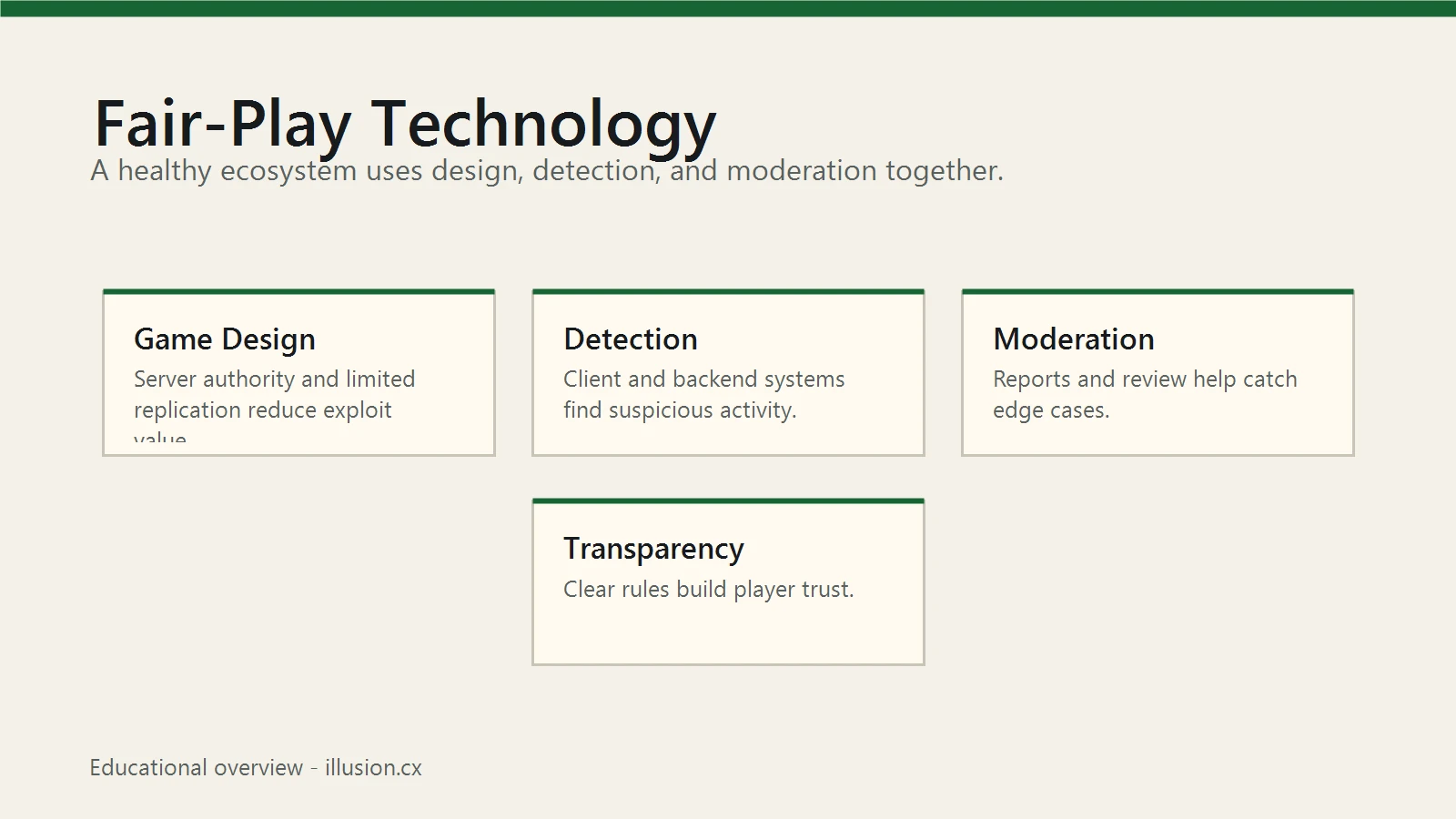
Kernel-level anti-cheat is powerful, controversial, and increasingly common in competitive PC games. It is best understood as one layer in a broader security stack, not a magic solution.
Continue exploring: For more educational resources and shop information, visit the Illusion homepage.