Fair-Play Technology in Games: Detection, Design, Moderation, and Trust
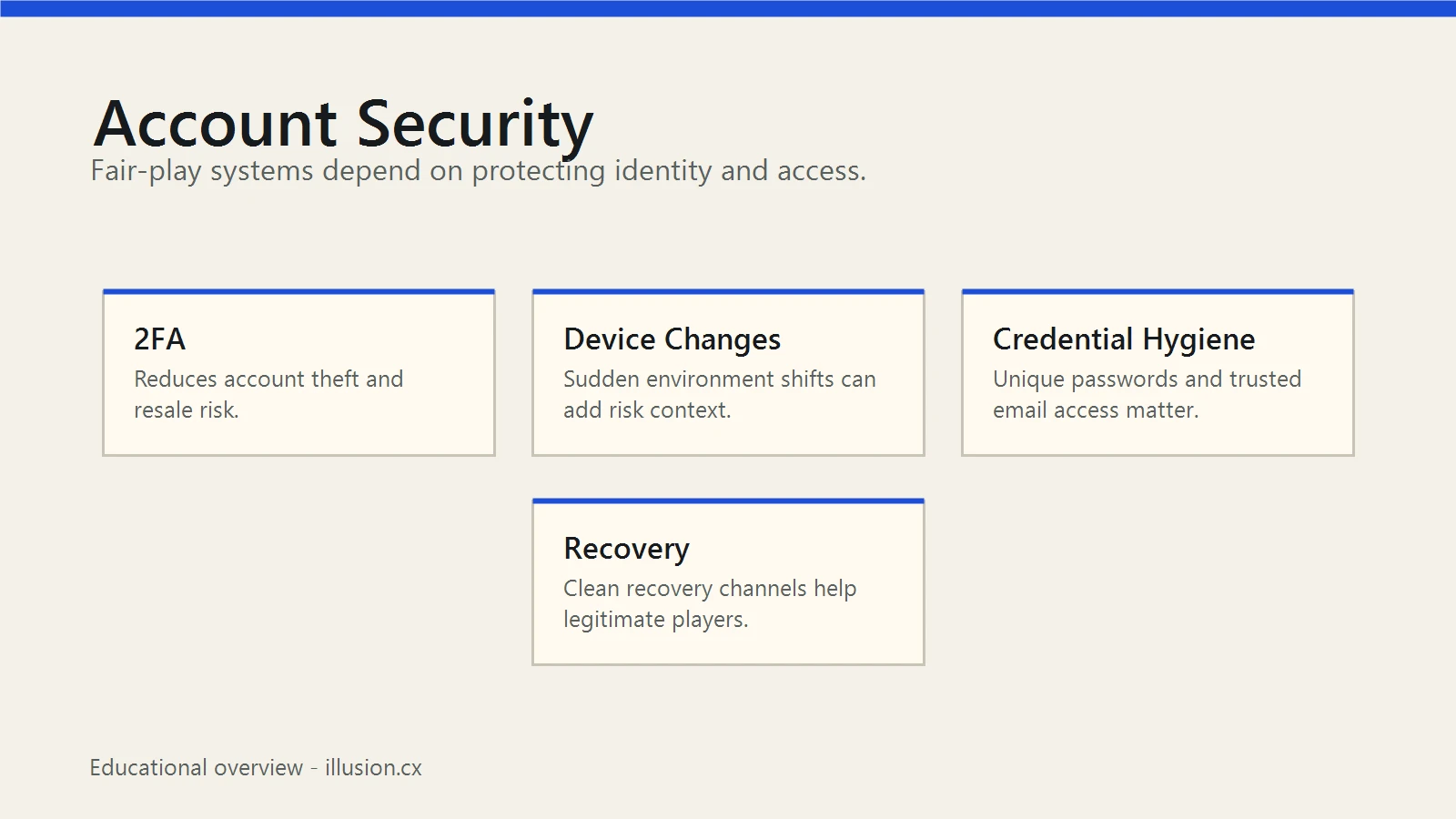
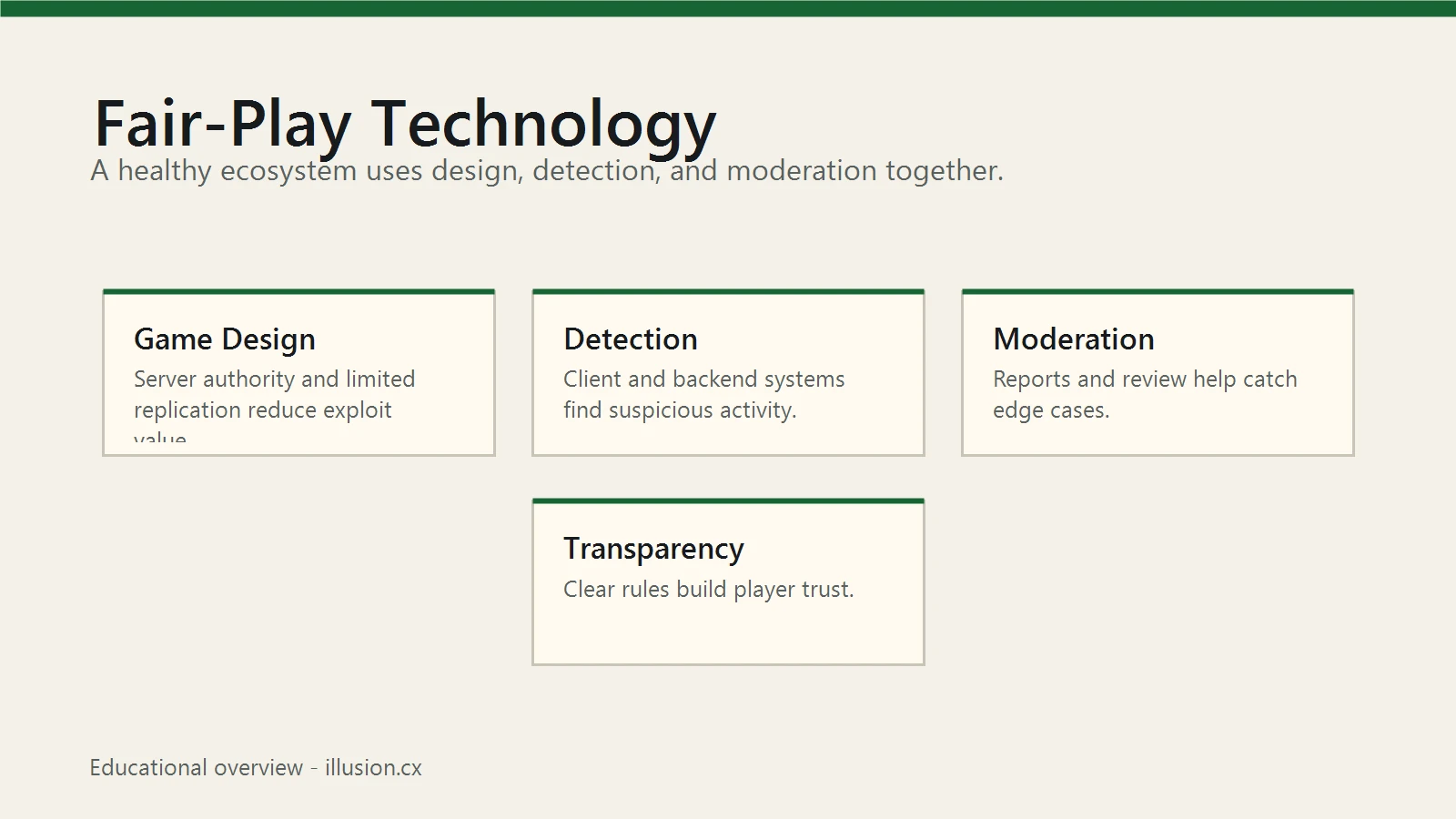
Fair-play technology is bigger than anti-cheat. A healthy multiplayer game uses secure design, detection systems, moderation workflows, reporting tools, account protection, and clear player communication.
Secure game design
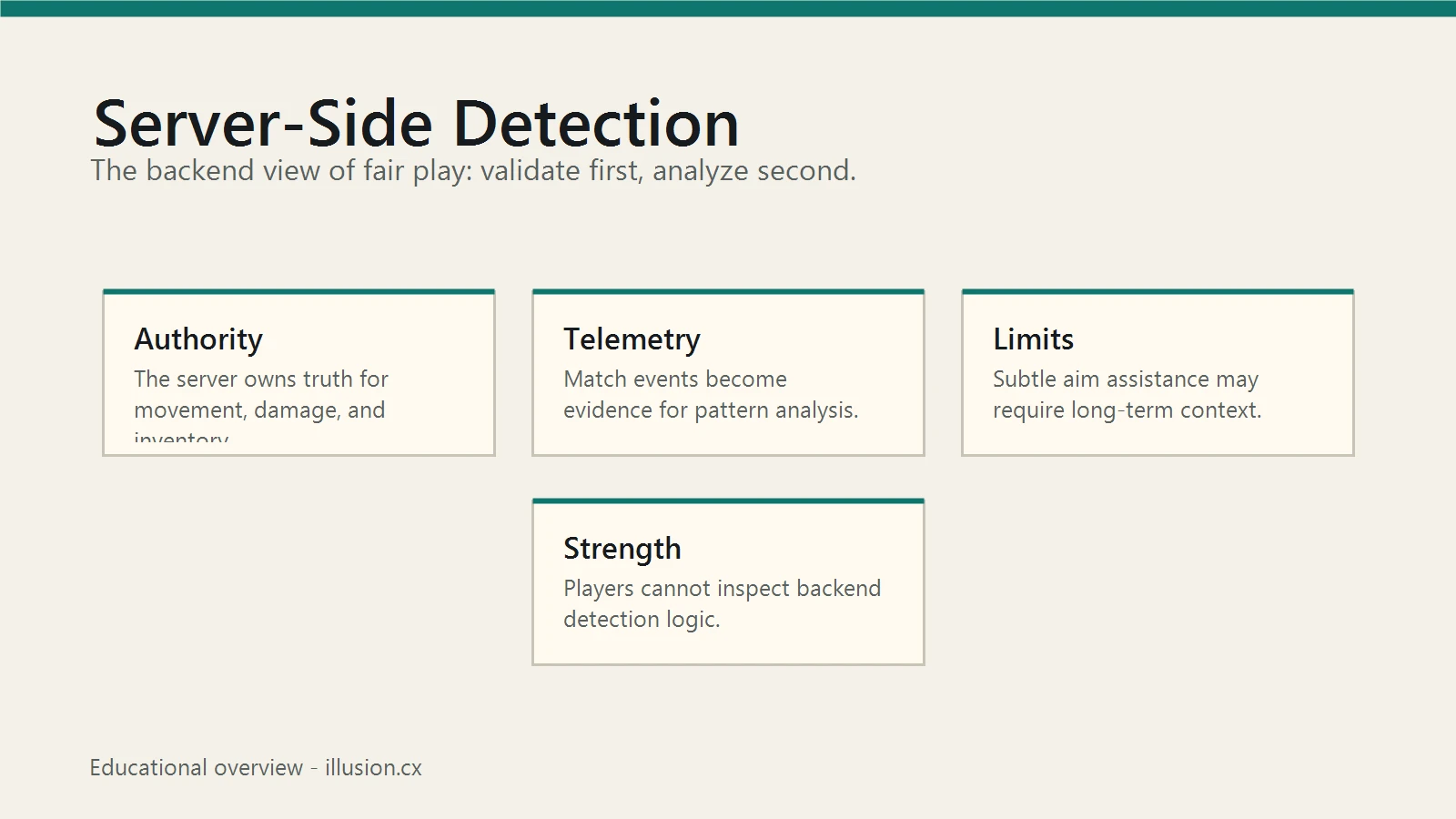
The strongest defense starts before detection. Server-authoritative movement, damage validation, limited information replication, and secure economy design reduce the value of many exploits.
Detection systems
Anti-cheat software can identify suspicious local tools, runtime tampering, memory changes, abnormal inputs, and behavior patterns. The best systems combine client-side and server-side signals.
Moderation and reports
Player reports still matter. Reports can highlight cases that automated systems miss, provide context, and help moderation teams prioritize review. Reporting systems work best when they are easy to use and resistant to abuse.
Transparency and trust
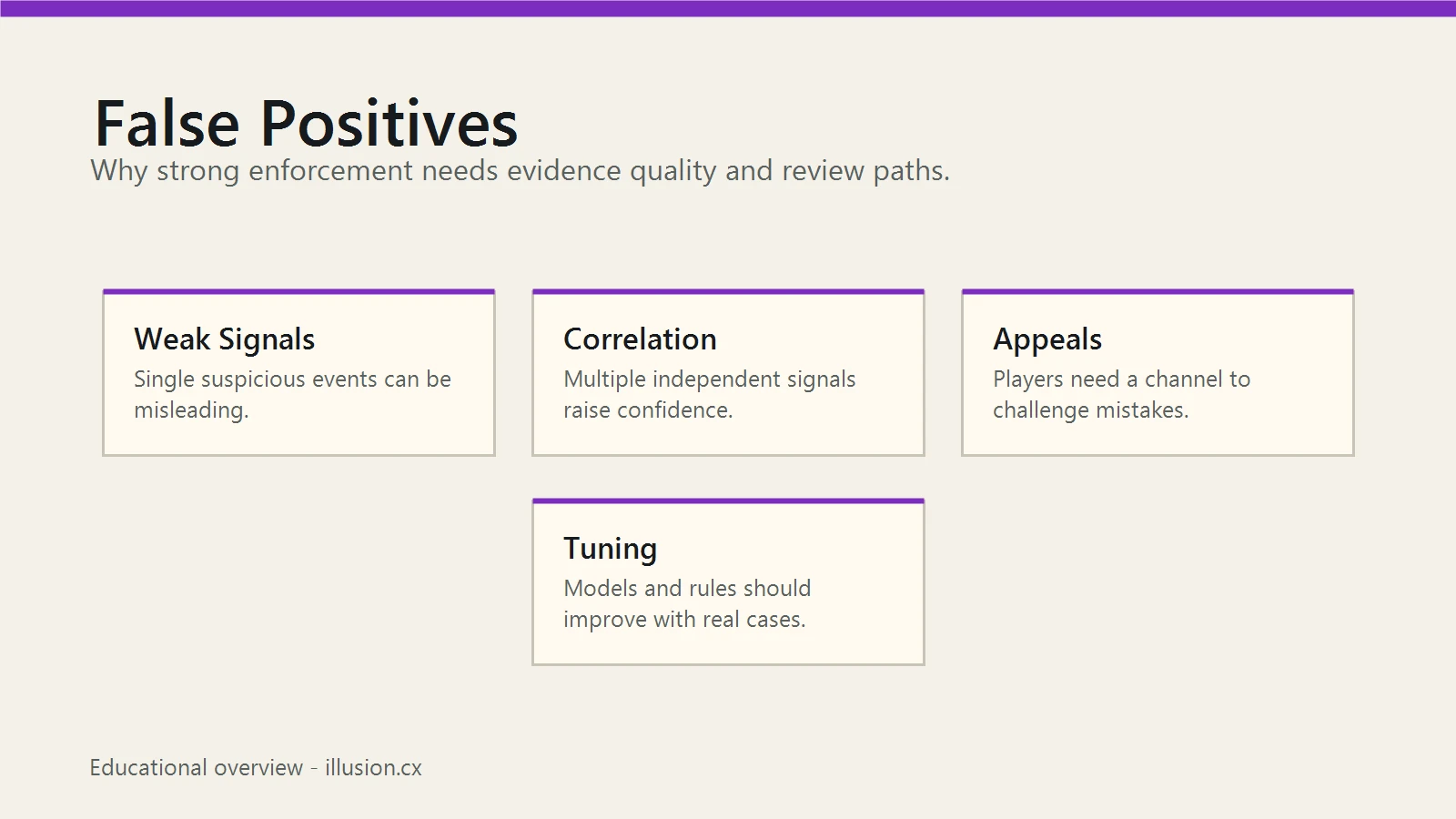
Players need clear rules, privacy explanations, appeal options, and consistent enforcement. Trust is part of fair play because players are more likely to stay when they believe the system is both effective and fair.
Bottom line
Fair-play technology is a full ecosystem. Detection is important, but durable competitive integrity depends on design, moderation, account security, and transparent policy.
Continue exploring: For more educational resources and shop information, visit the Illusion homepage.