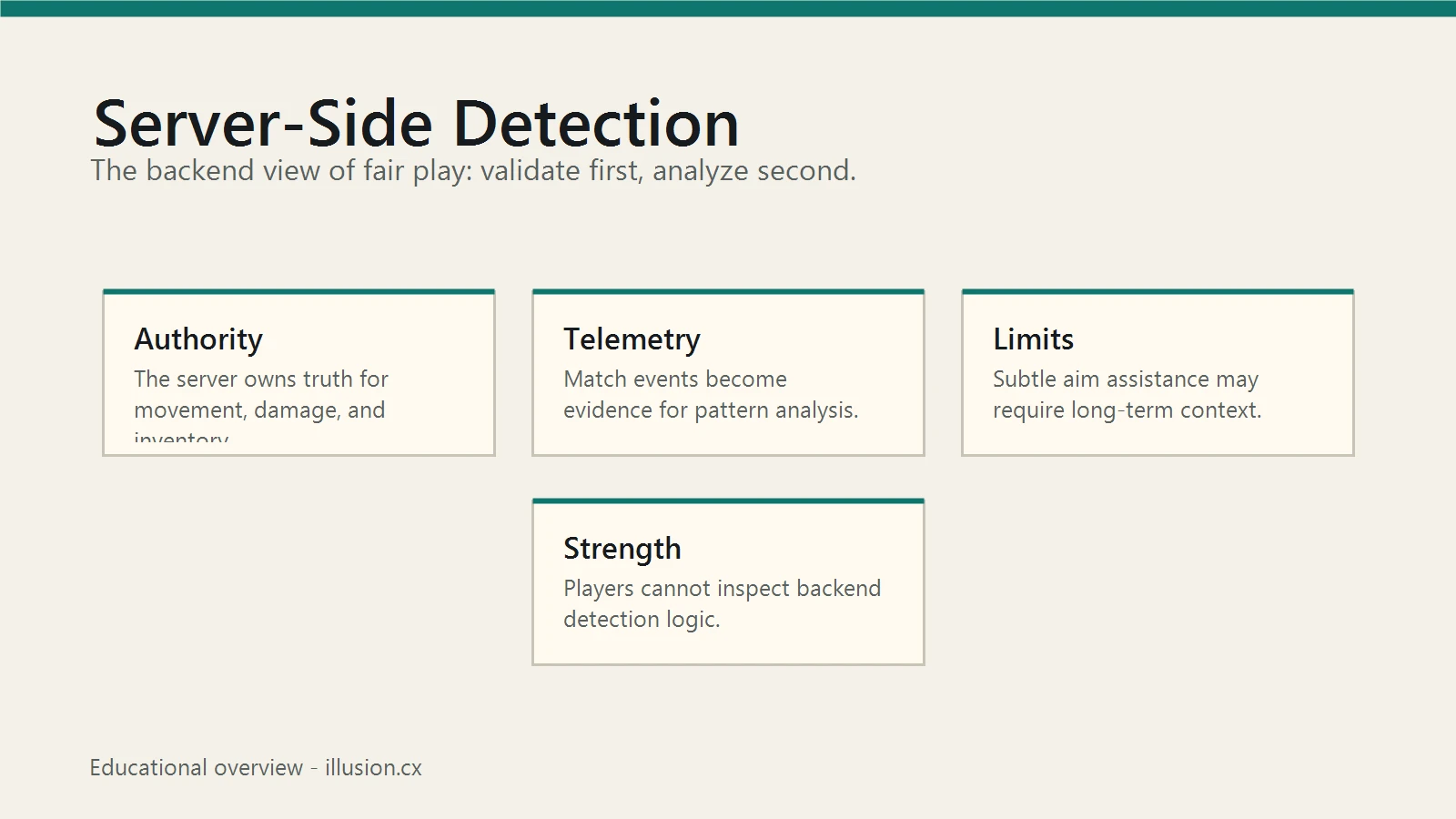
Server-Side Anti-Cheat Detection: How Backends Protect Fair Play
Server-side anti-cheat is one of the most important layers in modern game security. Instead of trusting the player's computer to report the truth, the server validates what is possible and analyzes match behavior over time.
The server owns truth
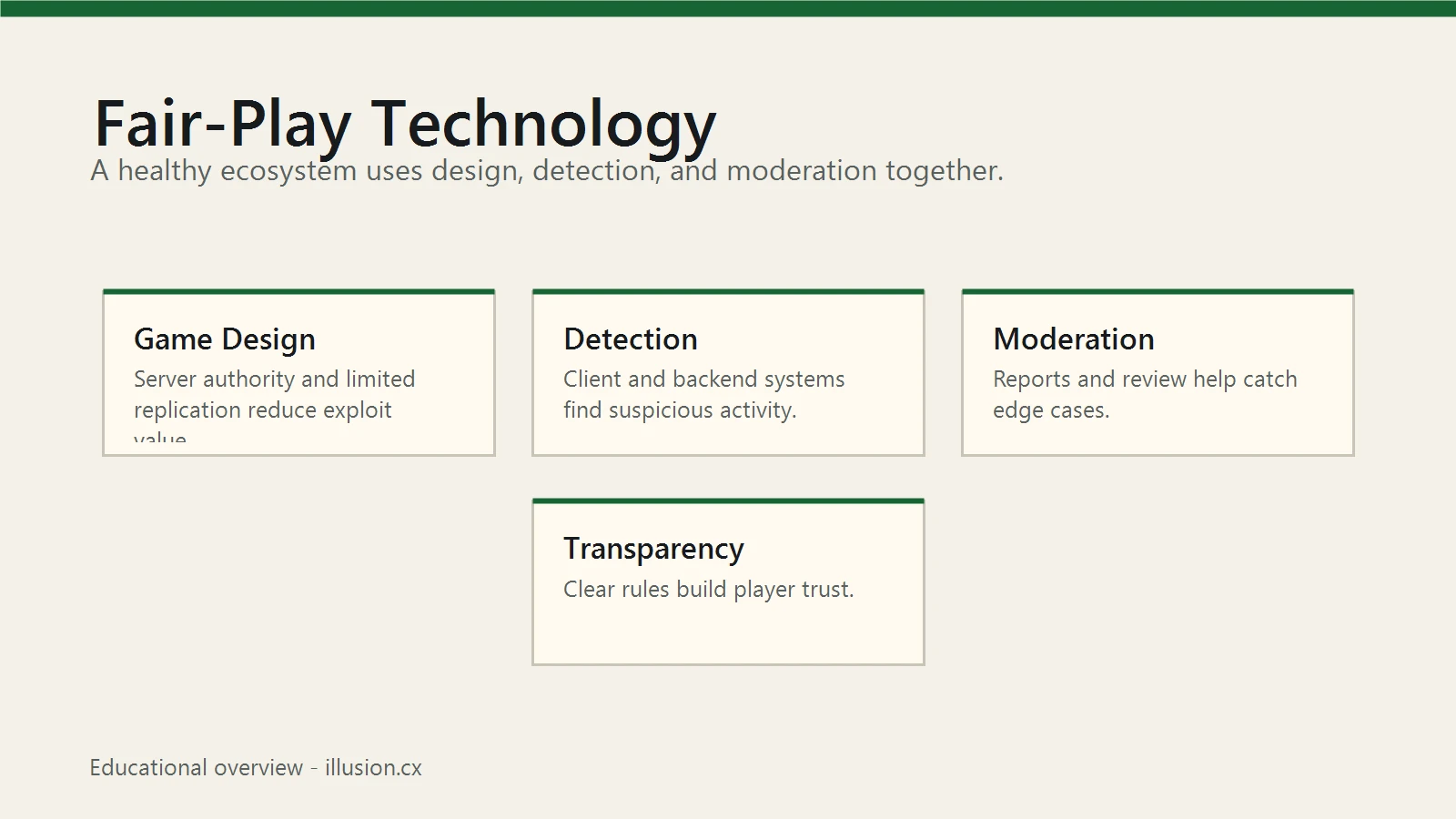
In a secure multiplayer architecture, the client sends inputs and requests. The server decides whether movement, damage, inventory changes, economy actions, and match events are valid. This prevents many exploits before a ban decision is needed.
Telemetry creates context
Every match generates data: aim events, movement paths, shot timing, line-of-sight interactions, ability usage, trading behavior, and more. Server-side detection turns that data into a long-term picture of player behavior.
Behavioral detection
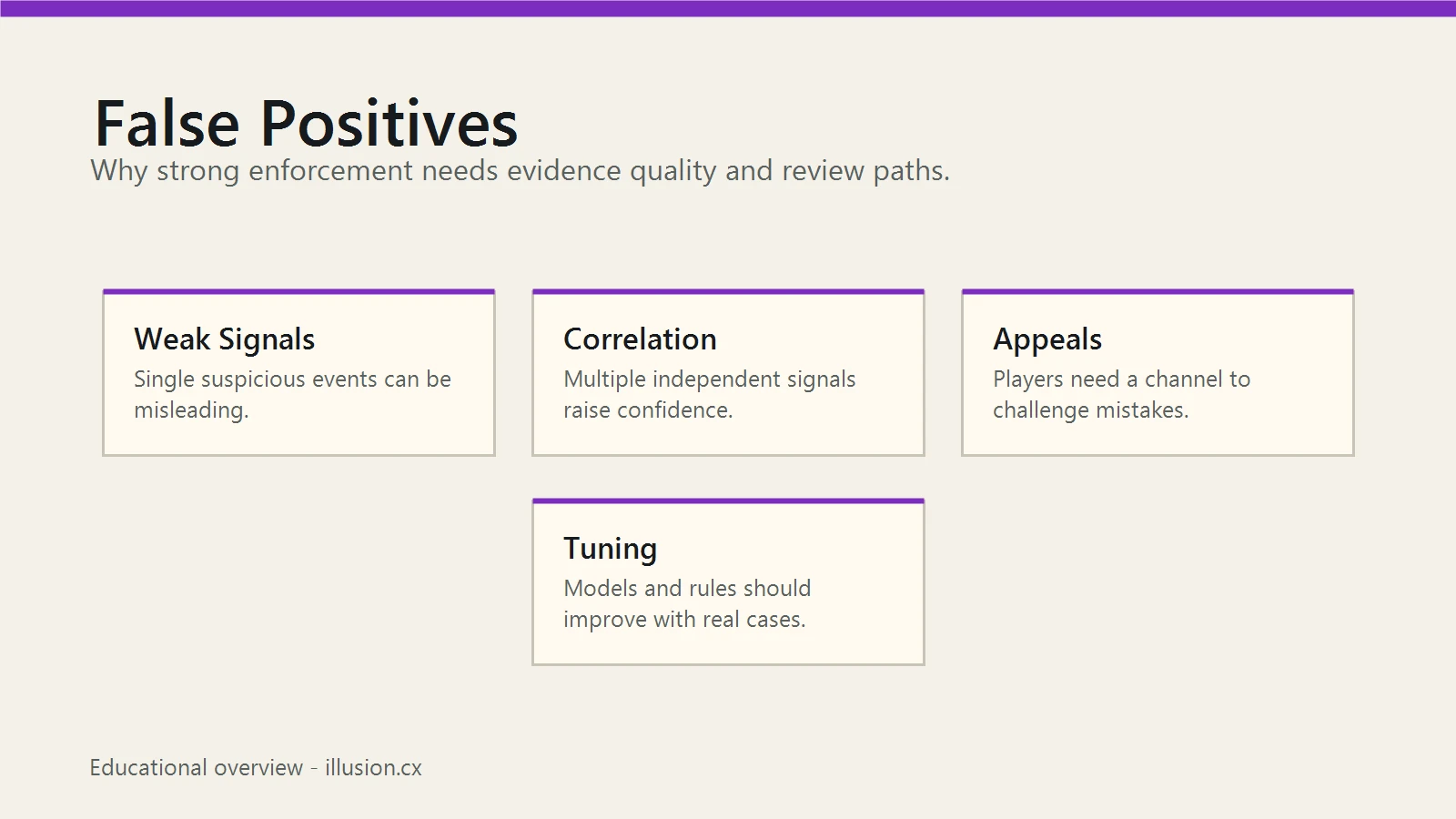
Some cheating patterns are not obvious from a single event. A suspicious player may need to be compared against normal skill ranges, weapon behavior, map context, and repeated match history. This is where behavioral analytics can help.
Why backend detection is hard to evade
Players cannot directly inspect the server's detection rules. That makes backend systems harder to study than client-side checks. It also lets developers update models without shipping every detail to the player's PC.
Bottom line
Server-side anti-cheat is not a replacement for every client-side tool, but it is the foundation of durable fair-play protection. The backend should own truth, validate actions, and analyze behavior over time.
Continue exploring: For more educational resources and shop information, visit the Illusion homepage.