False Positives in Anti-Cheat: Why They Happen and How Good Systems Reduce Them
A false positive happens when an anti-cheat system flags a legitimate player as suspicious. No serious developer wants this outcome. Mistaken enforcement damages trust, creates support pressure, and can punish the players a game most needs to keep.
Why false positives happen
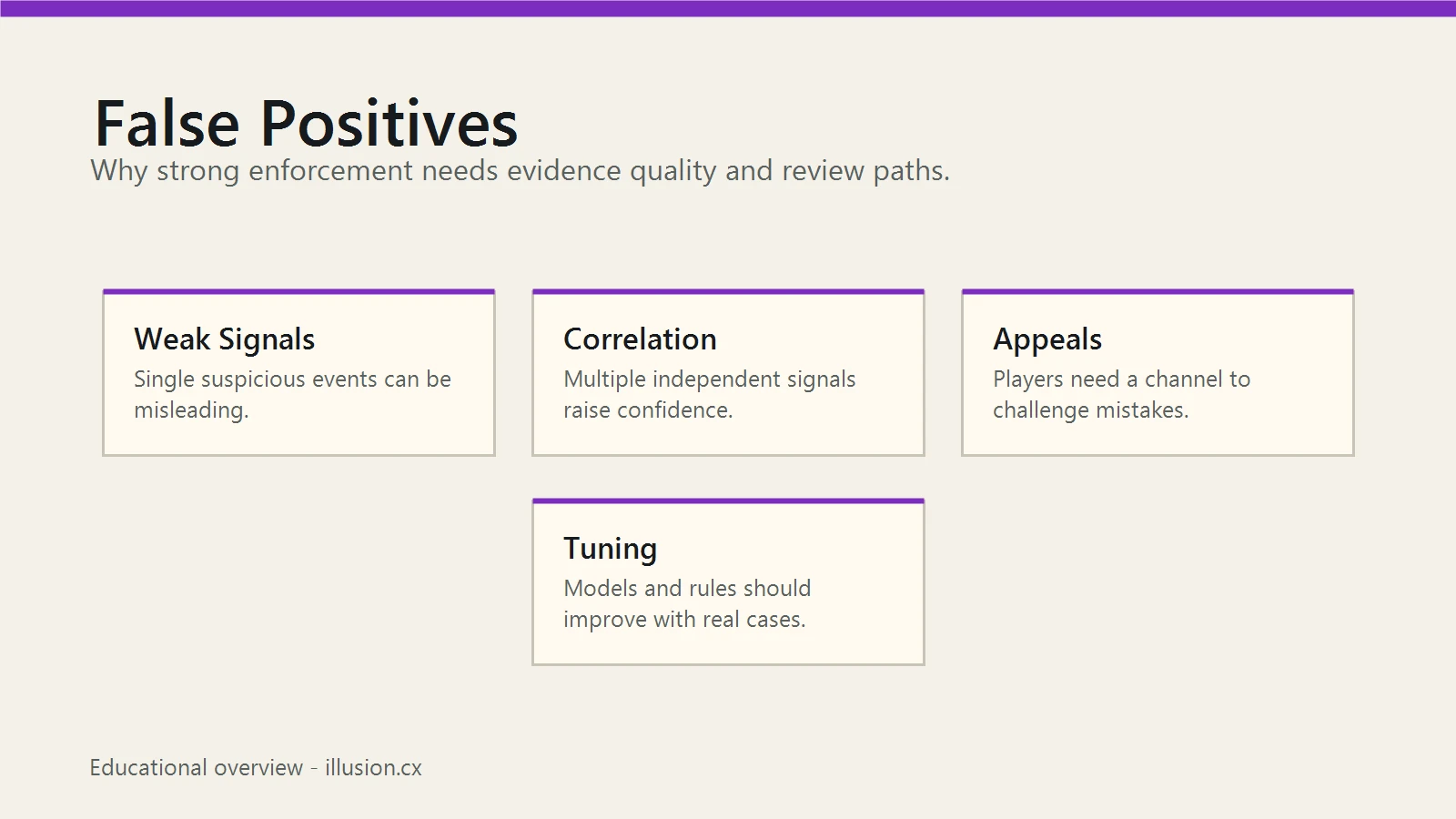
False positives can come from unusual hardware, conflicting software, overlays, accessibility tools, corrupted files, rare bugs, or gameplay that looks statistically unusual. A single weak signal is rarely enough for reliable enforcement.
Why layered evidence matters
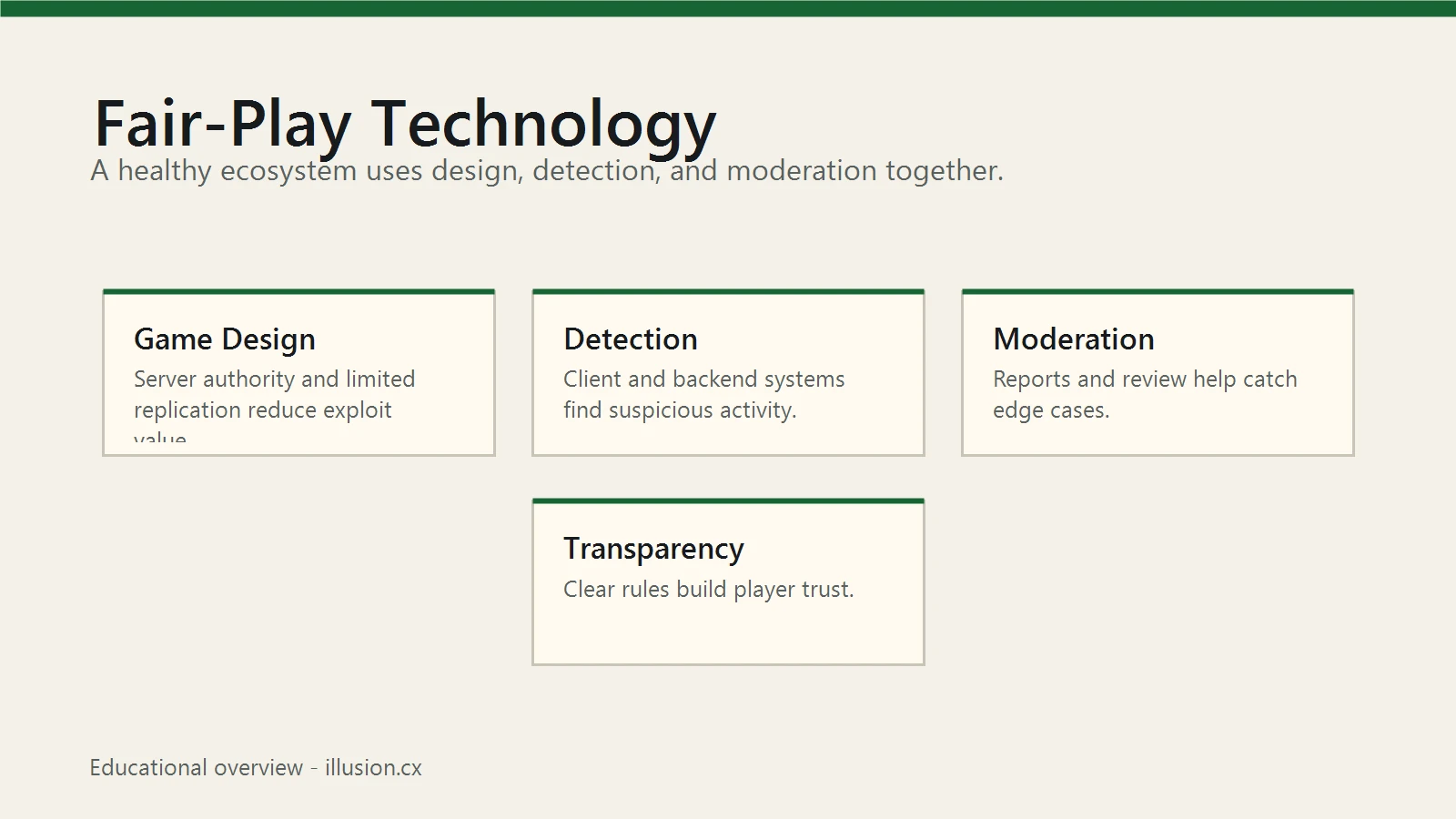
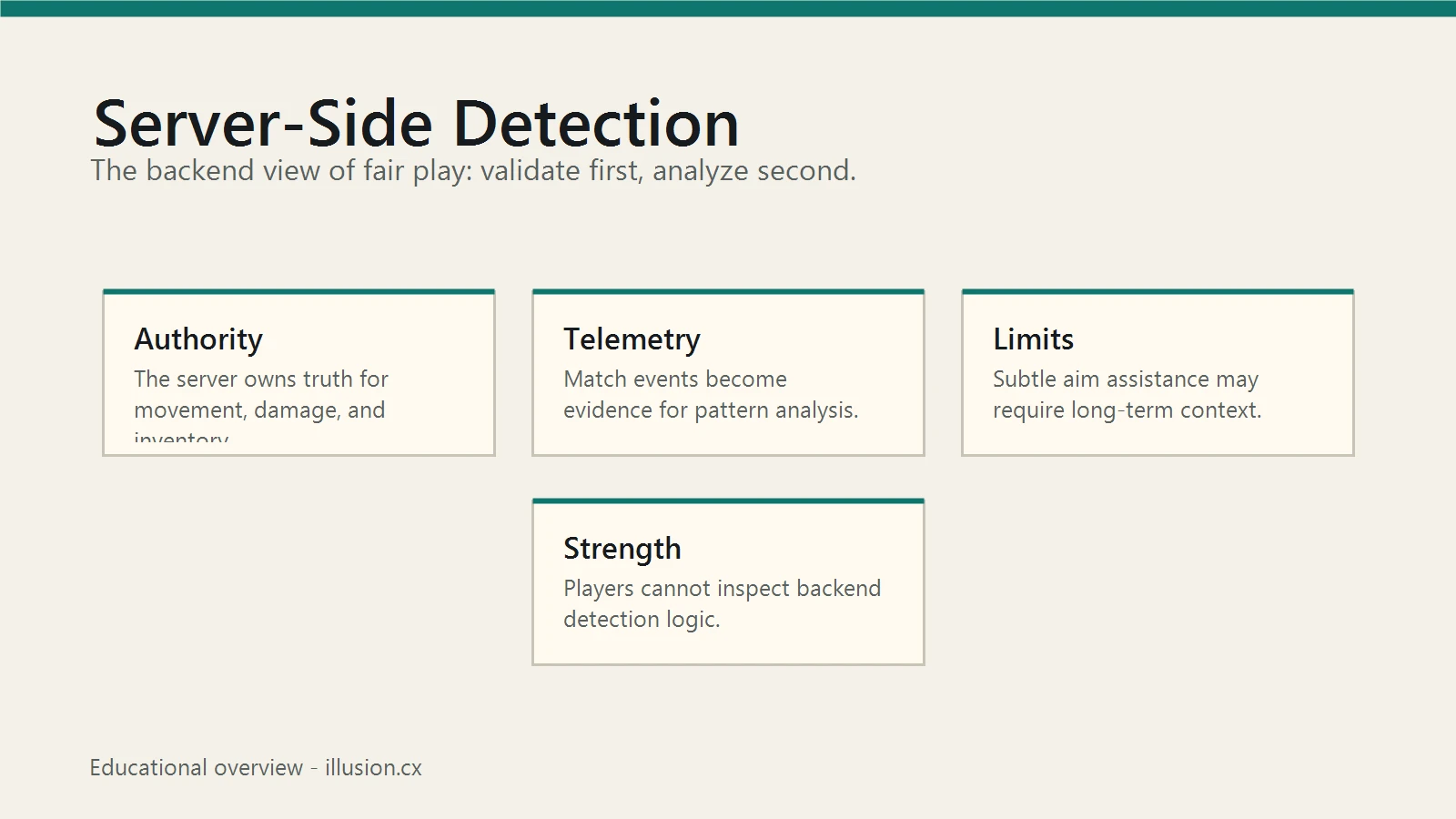
Good anti-cheat systems combine independent signals. A known cheat signature, a memory integrity issue, suspicious process behavior, and abnormal match telemetry together carry more weight than any one signal alone.
Manual review and appeals
Appeal systems matter because edge cases exist. A useful appeal process gives legitimate players a path to challenge enforcement while helping developers identify detection rules that need tuning.
Delayed ban waves
Some publishers delay enforcement until confidence is high. This can reduce false positives and make it harder for malicious developers to identify exactly what changed.
Bottom line
The best anti-cheat systems do not just catch more cheaters. They also protect legitimate players by requiring strong evidence, reviewing edge cases, and improving detection quality over time.
Continue exploring: For more educational resources and shop information, visit the Illusion homepage.