The State of Anti-Cheat in 2026: EAC, BattlEye, Vanguard, RICOCHET, and FACEIT
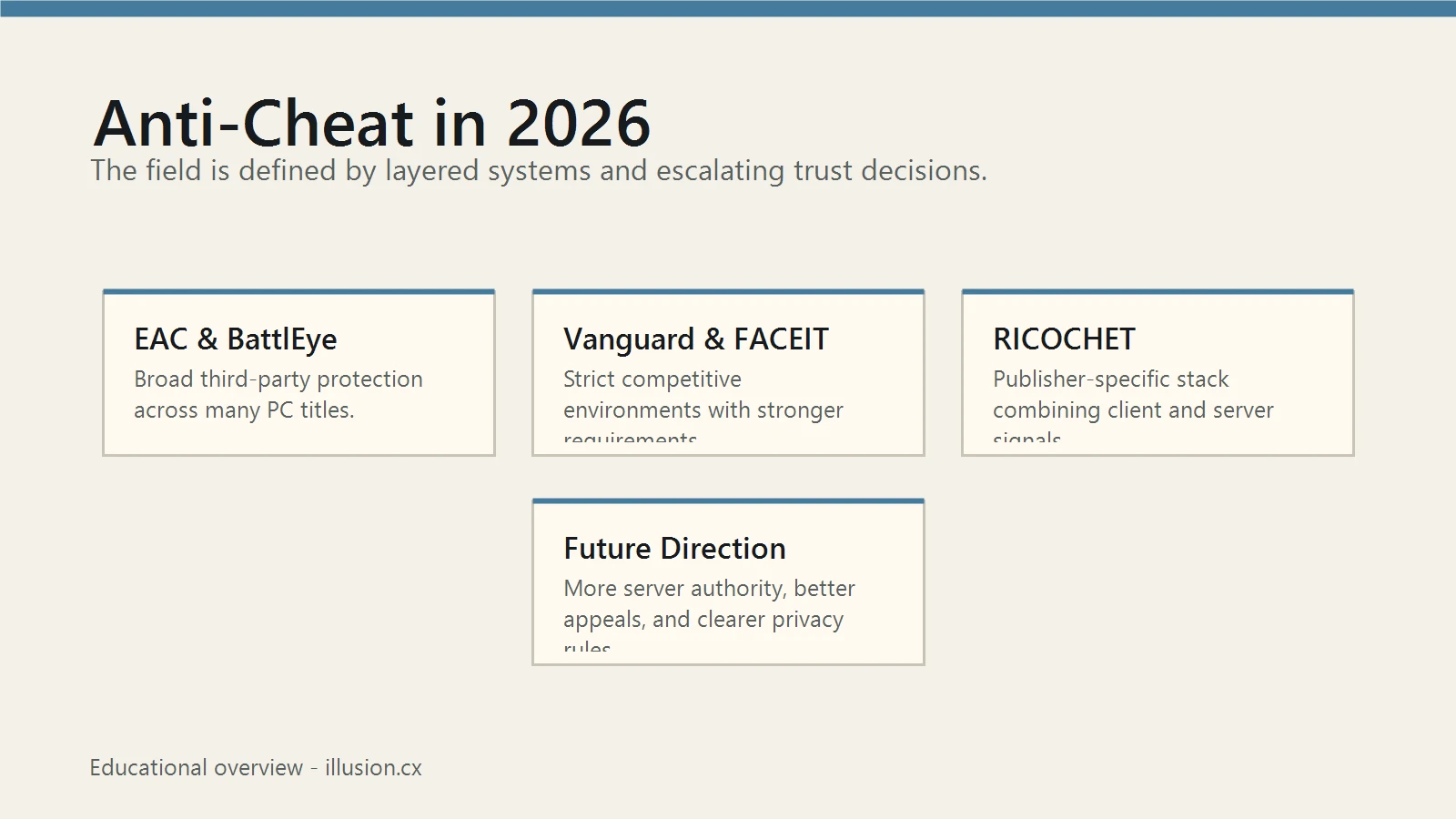
Anti-cheat in 2026 is no longer just a background scanner. Competitive games now rely on layered systems that combine kernel drivers, client integrity, server-side analytics, machine learning, account risk scoring, and human review.
This overview explains the major anti-cheat names players see most often and how the overall landscape has changed. It is neutral, educational, and does not describe bypass methods.
Easy Anti-Cheat
Easy Anti-Cheat, often called EAC, is widely used across PC games because it is available through the Epic ecosystem and supports many genres. It combines client-side protection, integrity checks, and backend enforcement. Players commonly encounter it in battle royale games, survival games, shooters, and multiplayer titles with large PC audiences.
BattlEye
BattlEye has protected competitive PC titles for years and remains common in tactical shooters, survival games, and sandbox multiplayer titles. Its reputation comes from fast updates, broad deployment, and deep client-side monitoring. Like other major systems, it is only one part of a broader enforcement strategy.
Vanguard
Riot Vanguard is best known for Valorant. It is discussed heavily because of how early its driver loads and how strict Riot is about competitive integrity. Vanguard represents the aggressive end of the anti-cheat spectrum: high trust demands, strong control, and a focus on protecting ranked play.
RICOCHET
RICOCHET is Activision's anti-cheat initiative for Call of Duty. It combines PC client protection with server-side tools and visible enforcement communication. One notable part of the RICOCHET approach is the use of mitigations and backend analytics alongside traditional ban enforcement.
FACEIT Anti-Cheat
FACEIT Anti-Cheat is tied to competitive matchmaking and tournament-style environments. Because the stakes are higher in organized competitive play, FACEIT can require stricter conditions than casual matchmaking systems. Its audience expects stronger enforcement even if that means more friction.
What changed in 2026
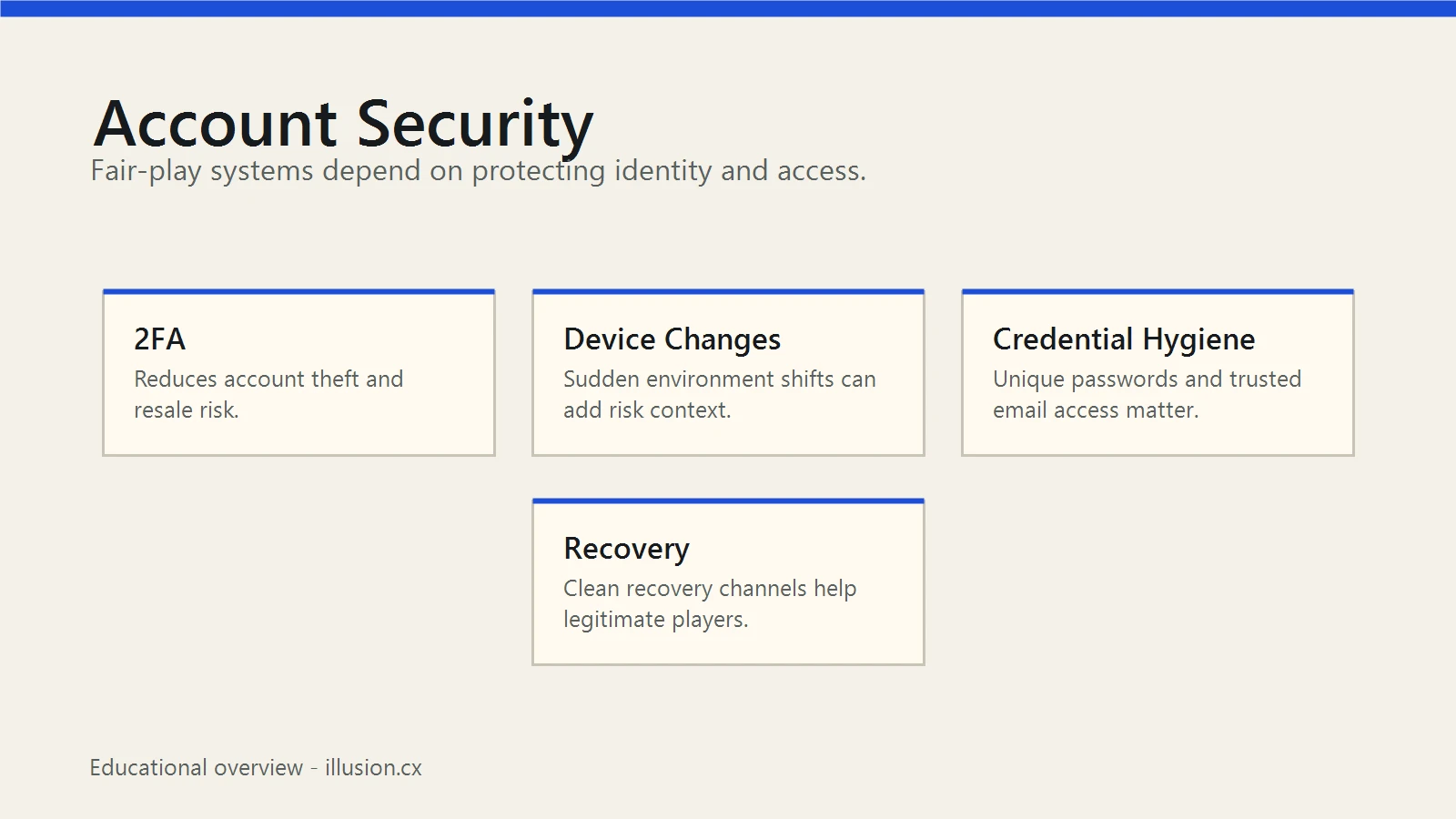
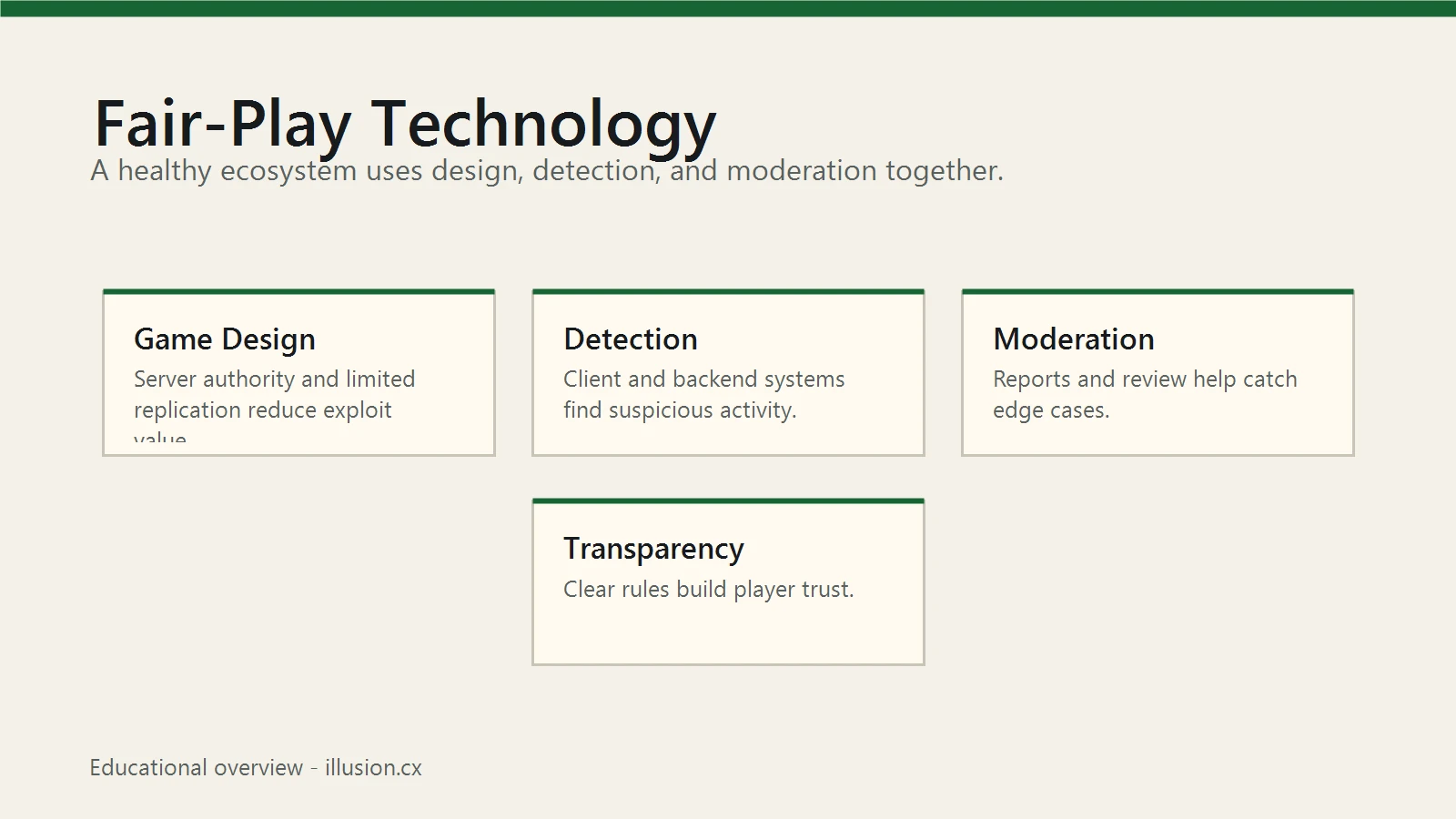
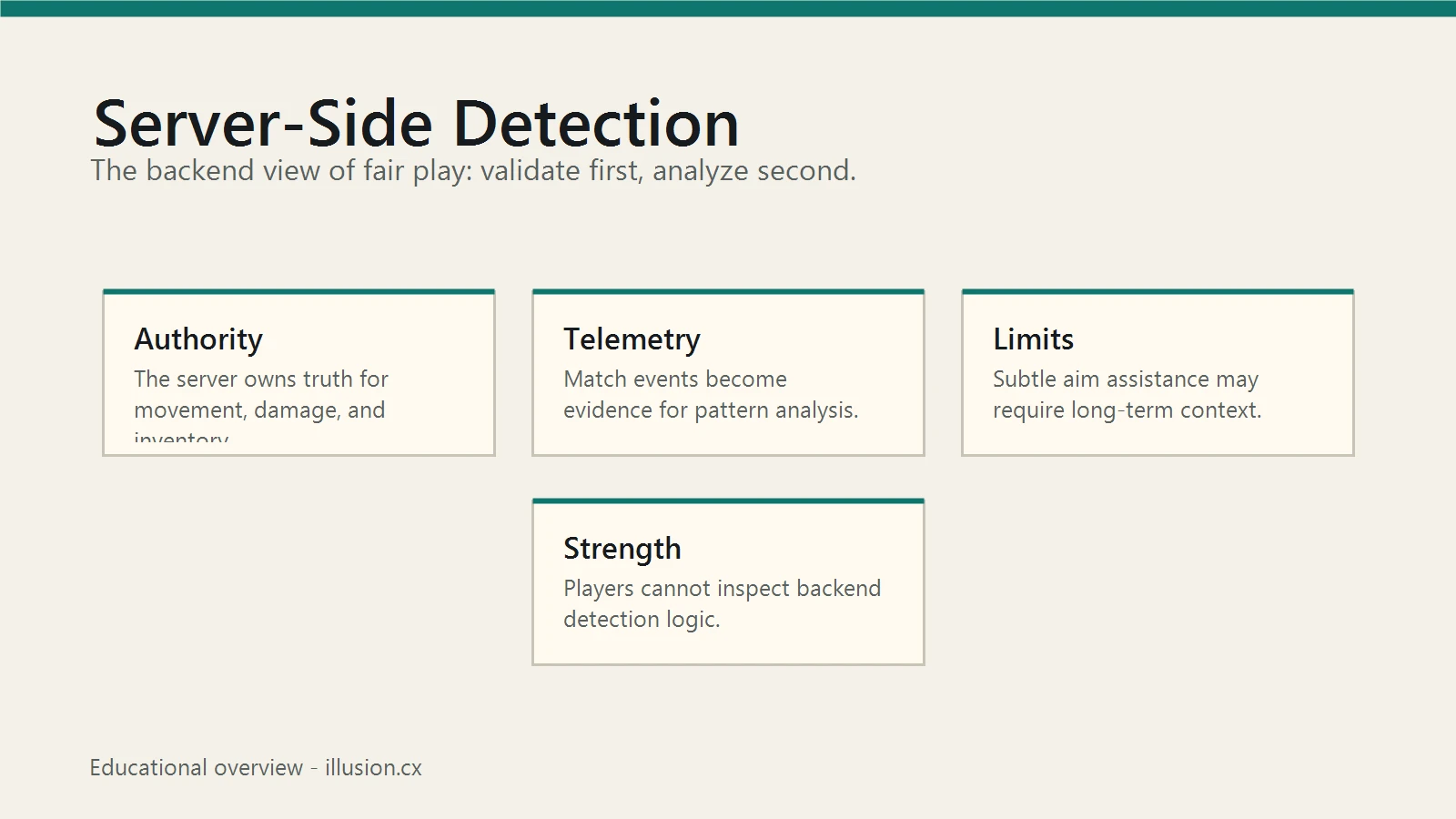
The biggest shift is layered detection. Studios now understand that no single tool solves cheating. Kernel drivers can help detect local tampering. Server authority can block impossible actions. Behavioral models can flag suspicious match patterns. Manual review can resolve edge cases. Account systems can reduce repeat abuse.
What players should understand
Anti-cheat systems are designed to protect fair play, but they also create tradeoffs around privacy, performance, compatibility, and transparency. Players should understand what runs on their PC, when it runs, and how the game handles false positive appeals.
Bottom line
The anti-cheat landscape in 2026 is defined by escalation and layering. EAC, BattlEye, Vanguard, RICOCHET, and FACEIT all approach the problem differently, but the strongest results come from combining client-side visibility with server-side truth.
Continue exploring: For more educational resources and shop information, visit the Illusion homepage.