Game Ban Risks Explained: Accounts, Devices, Software, and Fair-Play Rules
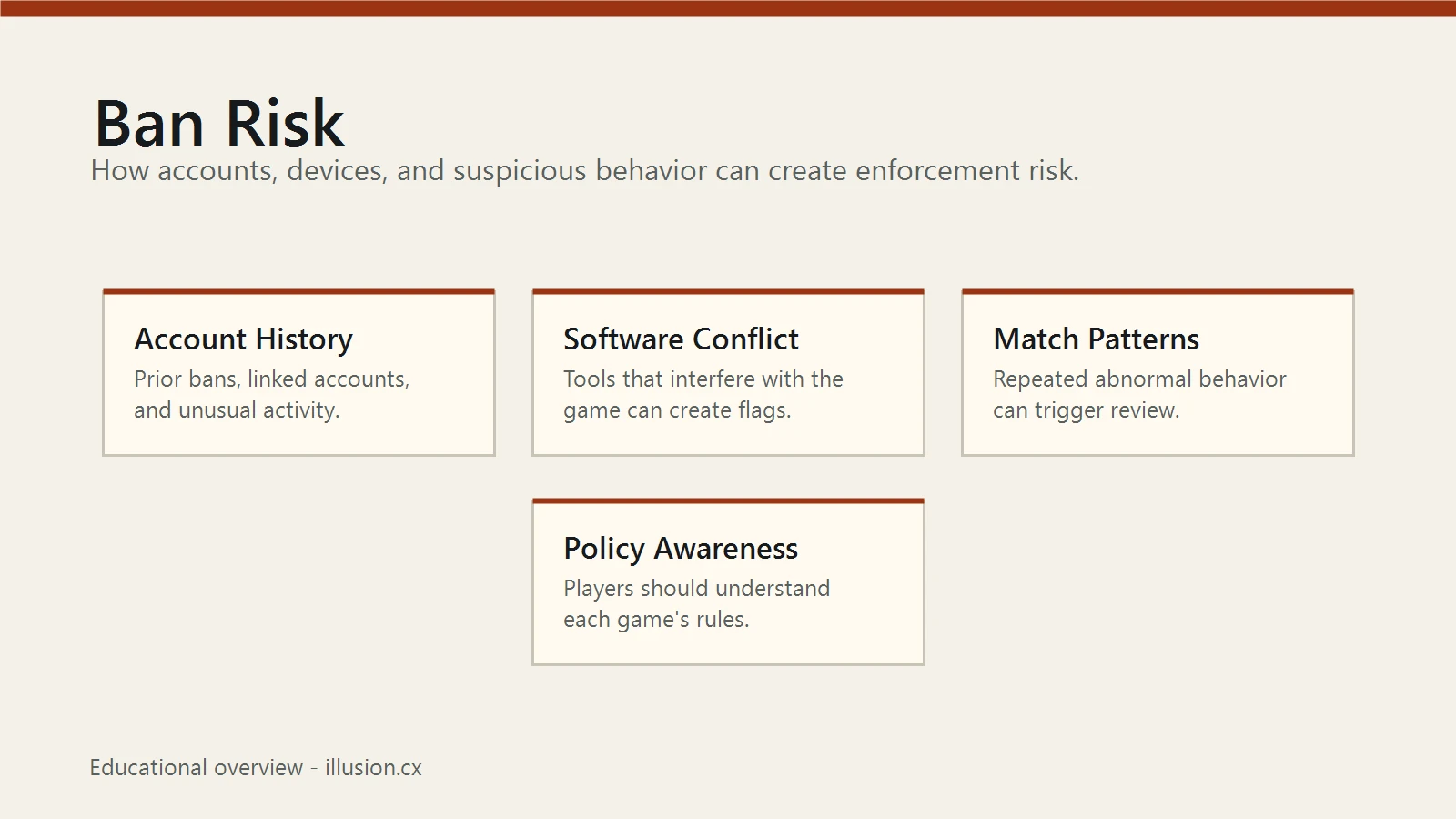
Ban risk is not always about one match or one file. Modern enforcement systems may consider account history, device context, software behavior, gameplay telemetry, payment activity, and links to previously banned accounts.
Account history
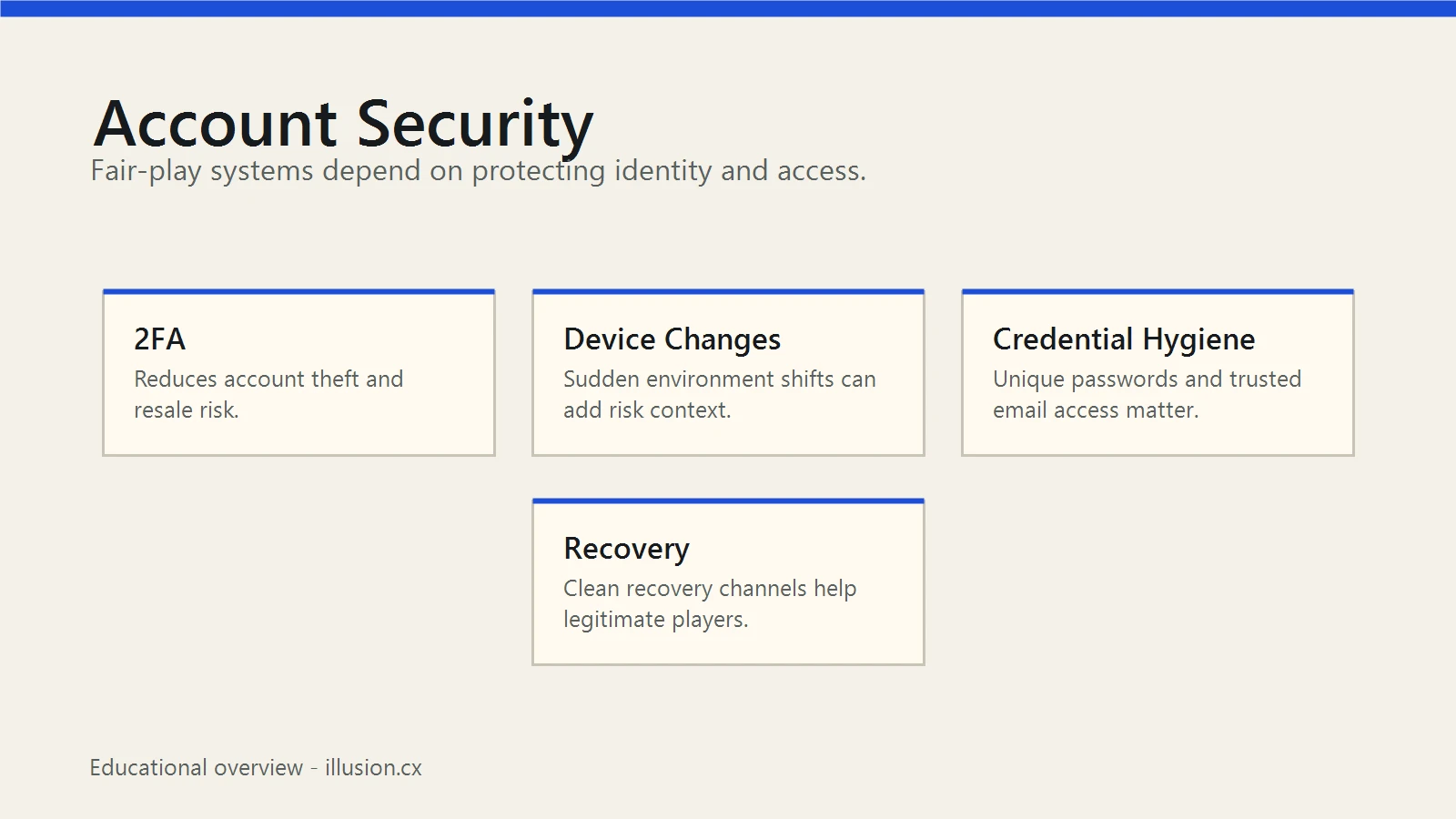
New accounts with unusual activity, shared access, suspicious login patterns, or connections to banned accounts can attract more scrutiny. Account security is part of fair-play protection because stolen or resold accounts are often used for abuse.
Software conflicts
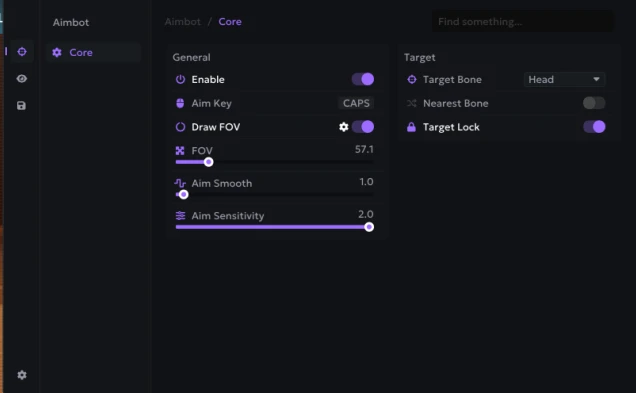
Tools that interact with a protected game can create risk even if the player did not intend to cheat. Debuggers, injectors, overlays, automation tools, macro utilities, and low-level system utilities may be treated differently by each game.
Device and environment signals
Some publishers use hardware or device reputation as part of repeat-offender prevention. This can include signals from the PC environment, linked accounts, and enforcement history.
Gameplay behavior
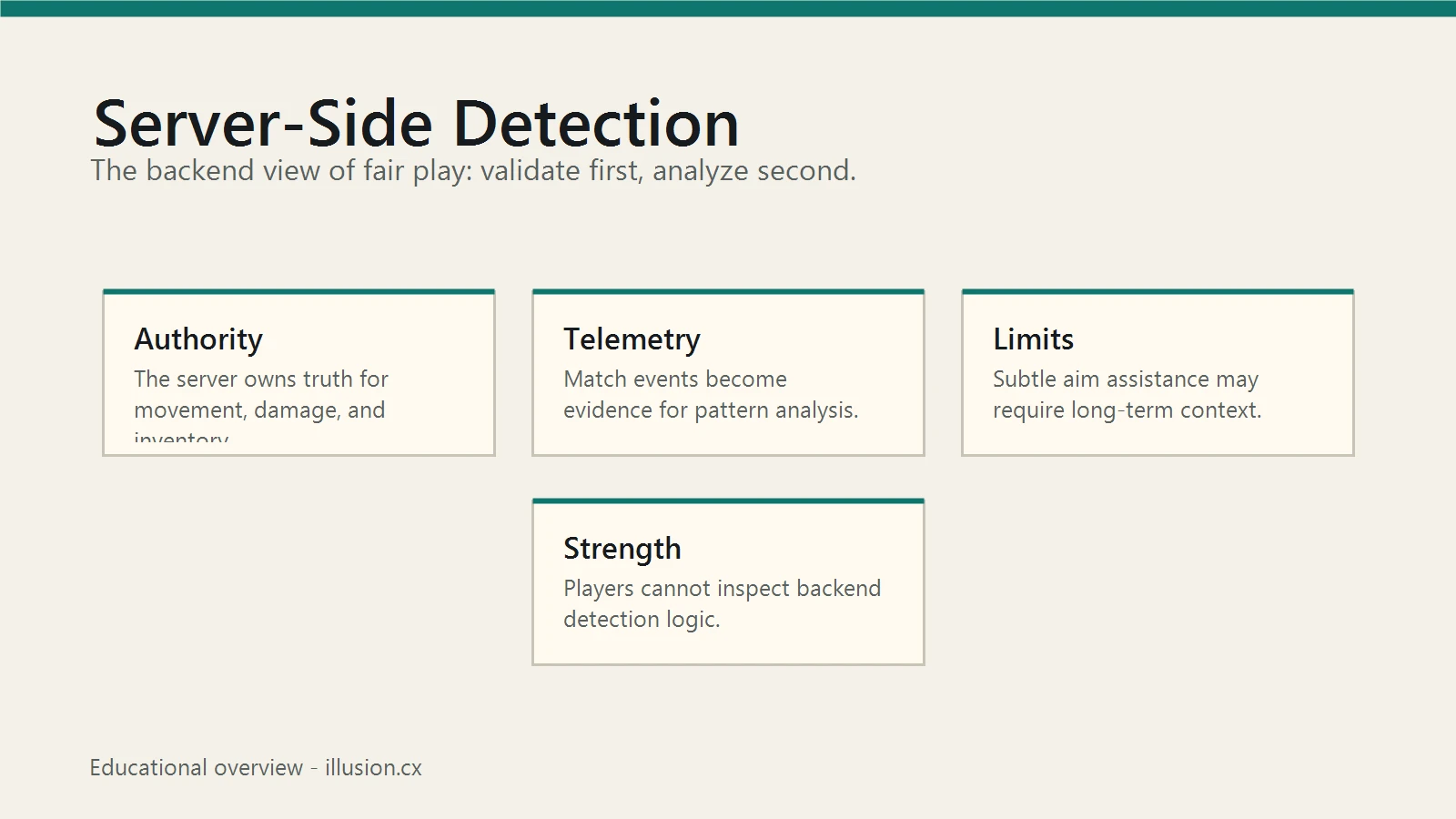
Server-side detection can flag repeated patterns such as impossible movement, abnormal reaction timing, unusual accuracy curves, or combat behavior that does not fit normal play. The stronger systems look for patterns over time rather than isolated moments.
Bottom line
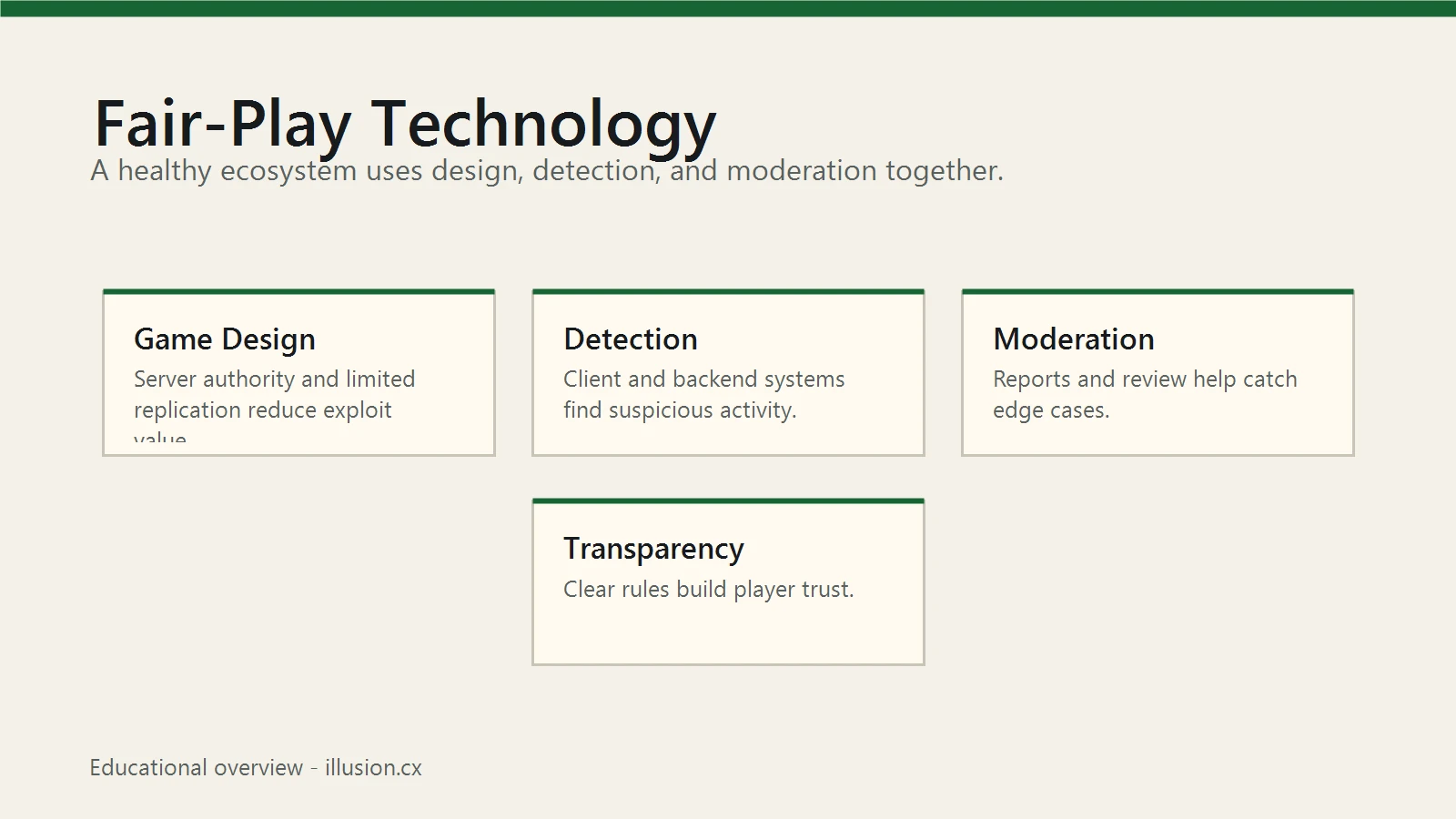
The safest approach is to understand each game's rules, keep accounts secure, avoid suspicious third-party tools, and treat anti-cheat enforcement as a layered system rather than a single scan.
Continue exploring: For more educational resources and shop information, visit the Illusion homepage.