Anti-Cheat Privacy Explained: What Players Should Know
Anti-cheat privacy matters because modern protection systems can collect technical signals from the player's PC and gameplay session. Some systems operate only while a game is running. Others use deeper components that load earlier or maintain services in the background. The difference matters.
What privacy questions should players ask?
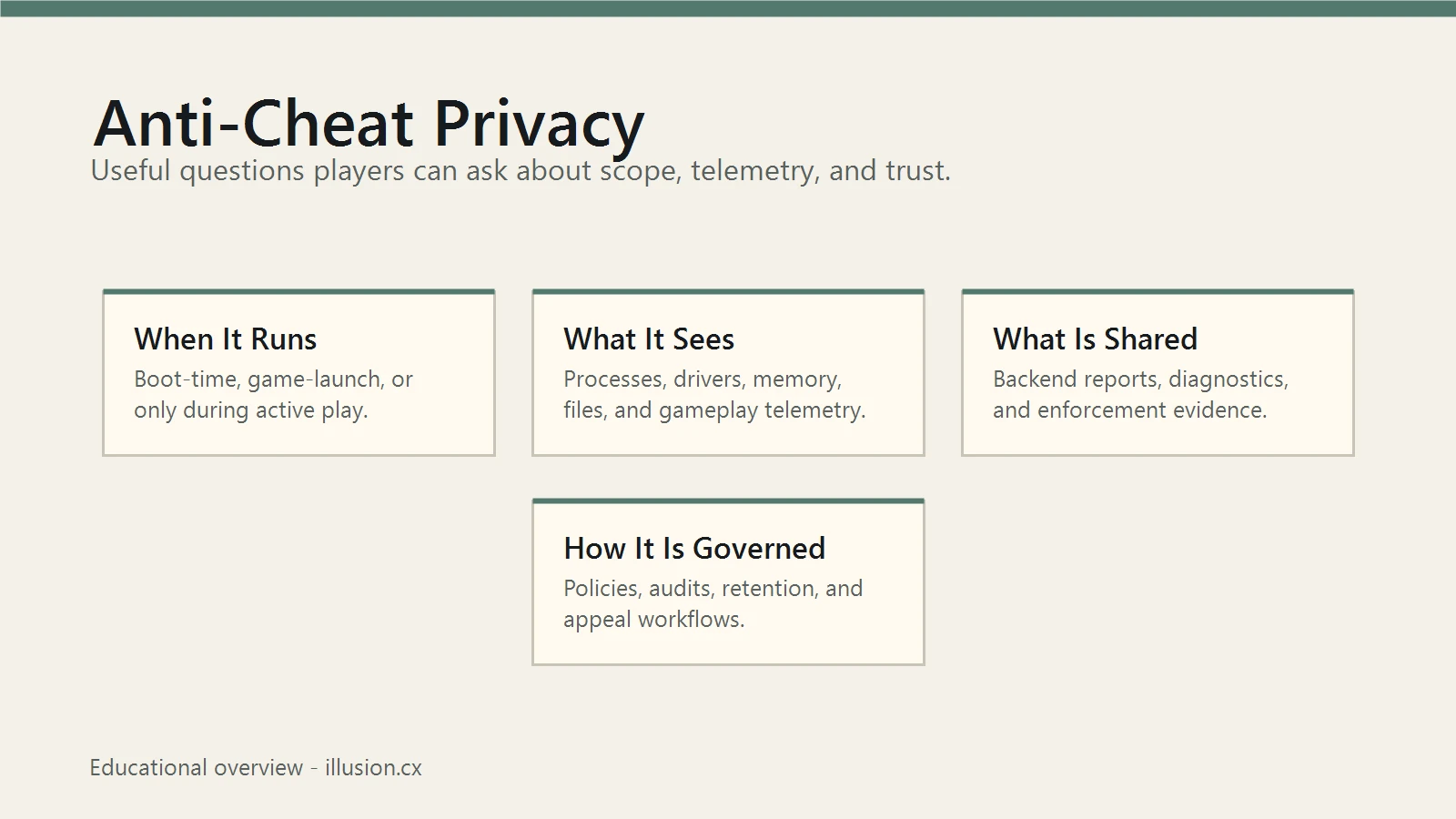
Players should ask when the anti-cheat runs, what it can inspect, what data is sent to servers, how long that data is retained, and whether there is a clear appeal process for enforcement mistakes. These questions are reasonable even when the goal is fair play.
Why anti-cheat needs visibility
Cheating tools often interact with the game process, input stream, drivers, overlays, or memory. Anti-cheat systems need enough visibility to detect tampering, but that visibility should be scoped to the protected game and explained in clear policy language.
Kernel drivers and trust
Kernel-level systems create the biggest privacy discussion because they operate at a deep level of the operating system. A well-maintained driver can improve security, but it also requires careful engineering, stability testing, and transparent communication from the publisher.
Telemetry versus personal data
Gameplay telemetry and system telemetry are not the same as private files or personal communications. Responsible anti-cheat design should minimize unnecessary data collection and focus on signals relevant to game integrity.
Bottom line
Anti-cheat privacy is a trust issue. The best systems protect fair play while being clear about scope, runtime behavior, data use, and appeal options.
Continue exploring: For more educational resources and shop information, visit the Illusion homepage.